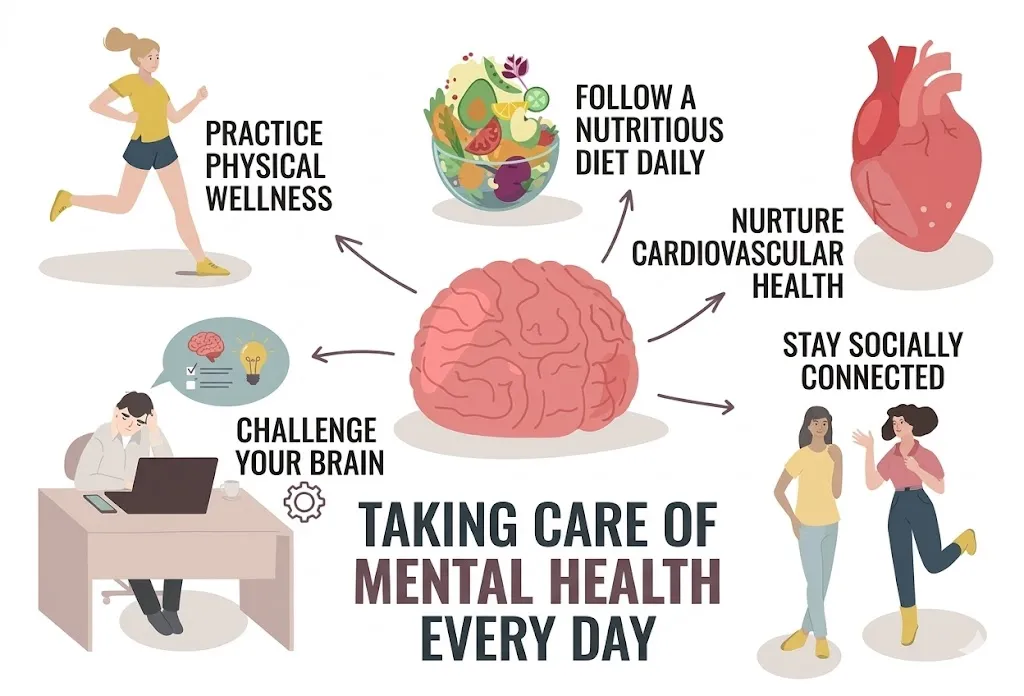
Learn how to taking care of mental health with simple self-care tips. Discover ways to reduce stress, improve mood, and know when to seek professional help.
Taking care of mental health includes your emotional, psychological, and social well-being. It affects how you think, feel, and act in daily life. Importantly, mental health is more than just the absence of mental illness—it is a vital part of your overall health and quality of life.
Practicing self-care for mental health can help you:
- Cope with stress effectively
- Improve emotional balance
- Boost energy and productivity
- Support recovery from mental health conditions
Taking care of your mind is just as important as taking care of your body.
1. How Can I Take Care of My Mental Health?
Taking care of mental health making time for activities that help you live well and improve both your physical and mental health. Even small daily habits can create powerful long-term benefits.
2. 8 Effective Self-Care Tips for Better Mental Health
2.1. Get Regular Exercise
Physical activity is one of the most effective ways to improve mental health.
Benefits:
- Boosts mood and reduces stress
- Improves overall health
- Increases energy levels
Just 30 minutes of walking daily can make a big difference.

2.2. Eat Healthy and Stay Hydrated
A balanced diet fuels both your body and mind.
Tips:
- Eat regular, nutritious meals
- Drink plenty of water
- Limit caffeine and alcohol
Good nutrition improves focus, mood, and energy.
2.3. Make Sleep a Priority
Sleep is essential for emotional stability and brain function.
Tips:
- Stick to a consistent sleep schedule
- Reduce screen time before bed
- Create a relaxing bedtime routine
Quality sleep helps regulate mood and mental clarity.
2.4. Try Relaxation Activities
Relaxation techniques can reduce stress and anxiety.
Examples:
- Meditation and mindfulness
- Deep breathing exercises
- Listening to music or reading
Regular relaxation supports emotional balance.
2.5. Set Goals and Priorities
Managing your time helps reduce overwhelm.
Tips:
- Focus on what matters most
- Break tasks into smaller steps
- Learn to say “no” when needed
Clear goals improve focus and reduce stress.
2.6. Practice Gratitude
Gratitude shifts your mindset toward positivity.
How to practice:
- Write down things you’re thankful for
- Reflect on positive moments daily
Gratitude enhances happiness and mental resilience.
2.7. Stay Connected
Strong relationships are key to mental well-being.
Benefits:
- Emotional support
- Reduced loneliness
- Improved coping skills
Stay connected with people who uplift and support you.

2.8. Focus on Positive Thinking
Your thoughts shape your emotions and actions.
Tips:
- Challenge negative thinking
- Replace it with constructive thoughts
Positive thinking strengthens mental resilience.
3. Key Takeaways
- Mental health is essential for overall well-being
- Small self-care habits can create big improvements
- Balance exercise, nutrition, sleep, and relationships
- Seek professional help when needed
4. Conclusion
Taking care of mental health is a daily commitment that impacts every part of your life.
By building simple habits like:
Exercising regularly
Eating well
Sleeping enough
Staying connected
You can create a healthier, happier, and more balanced life.