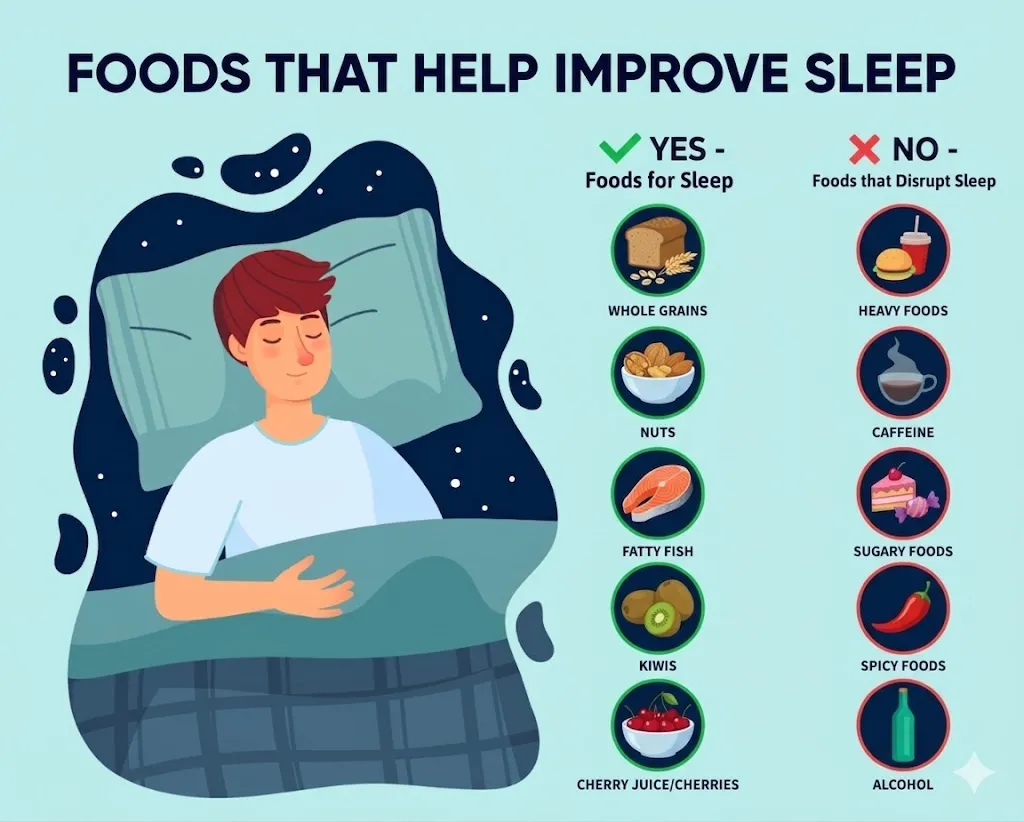
Sleep and nutrition are closely related, so we need to improve sleep. The foods and drinks you consume can directly affect sleep quality, energy levels, and your circadian rhythm. Although there is no ‘magical food’ that guarantees perfect sleep, some nutrient-rich foods can help promote relaxation, regulate hormones, and improve sleep.
Key nutrients such as melatonin, tryptophan, magnesium, and complex carbohydrates play a vital role in promoting better sleep. Understanding how these nutrients work can help you make smarter dietary choices for restful nights.
1. How Specific Nutrients Improve Sleep
1.1. Melatonin – The Sleep Hormone
Melatonin regulates your sleep-wake cycle (circadian rhythm) and signals your body when it’s time to sleep. Foods rich in melatonin can naturally support better sleep timing.
1.2. Tryptophan – The Sleep-Boosting Amino Acid
Tryptophan helps produce serotonin and melatonin, both essential for relaxation and improve sleep.
1.3. Magnesium – The Natural Relaxant
Magnesium helps relax muscles, calm the nervous system, and regulate melatonin production.
1.4. Carbohydrates – Supporting Hormone Conversion
Healthy carbohydrates assist the brain in converting tryptophan into serotonin, improving sleep efficiency.
2. Top Foods That Help You Sleep Naturally
2.1. Melatonin-Rich Foods
These foods naturally contain melatonin, helping regulate sleep cycles:
- Tart cherries (especially Montmorency cherries)
- Unsweetened tart cherry juice
- Nuts (almonds, pistachios)
- Eggs
- Milk
Drinking tart cherry juice regularly has been linked to longer sleep duration and improved sleep efficiency.

2.2. Foods Rich in Tryptophan
Tryptophan-rich foods help increase melatonin production:
- Fatty fish (salmon, tuna)
- Turkey and chicken
- Eggs and cheese
- Soy products (tofu, edamame)
- Pumpkin seeds and quinoa
Combining these foods with healthy carbs can enhance their sleep-inducing effects.
2.3. Foods High in Magnesium
Magnesium-rich foods support muscle relaxation and better sleep:
- Spinach and leafy greens
- Bananas
- Oats and whole grains
- Sweet potatoes
- Pumpkin seeds
Magnesium helps calm the nervous system and reduce nighttime awakenings.
2.4. Other Sleep-Promoting Foods
Additional foods that may improve sleep quality:
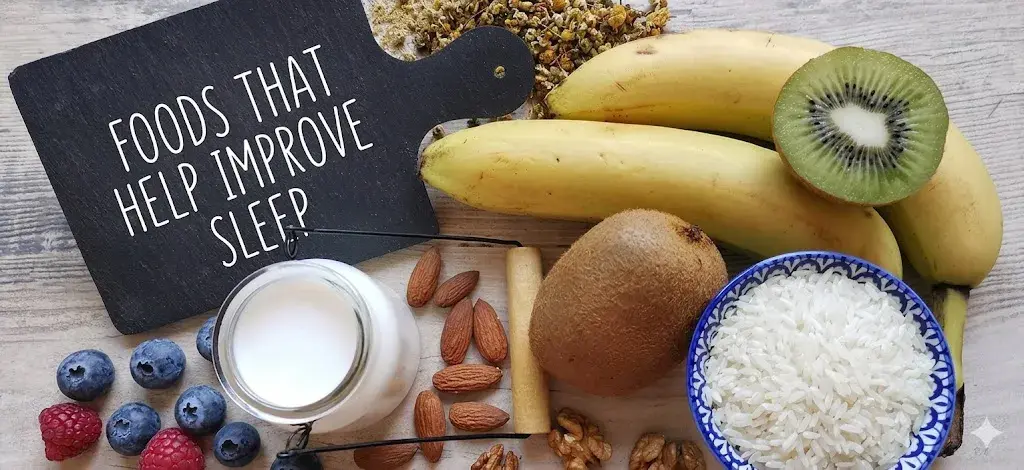
- Kiwi (improves sleep onset and duration)
- Rice (supports serotonin production)
- Chamomile tea (natural calming effect)
Chamomile tea contains apigenin, a compound known for its mild sedative and anti-anxiety effects.
3. Foods to Avoid Before Bed
Certain foods can negatively impact sleep quality and should be limited at night:
- Caffeinated drinks: coffee, energy drinks, soda
- Sugary foods: desserts, candy, processed snacks
- Spicy foods: may cause acid reflux and discomfort
- Fatty foods: reduce deep sleep quality
- Alcohol: disrupts REM sleep and causes frequent waking
Avoid caffeine at least 6–8 hours before bedtime for optimal sleep.
4. Food vs. Supplements: Which Is Better for Sleep?
Whole foods are generally more effective than supplements because they provide:
- A combination of nutrients working together
- Fiber for deeper sleep
- Antioxidants and phytochemicals for overall health
While supplements like melatonin may help, it’s best to prioritize a balanced, nutrient-rich diet and consult a healthcare professional if needed.
5. Conclusion: Build a Sleep-Friendly Diet
Improving sleep naturally starts with your diet. By including foods rich in melatonin, tryptophan, and magnesium, you can support your body’s natural sleep processes and enjoy deeper, more restorative rest.
Focus on consistent healthy eating patterns, avoid sleep-disrupting foods, and maintain a balanced lifestyle for long-term sleep health.