
Sleep disorders affect about 10–25% of the population, while meditation improves sleep has contributed to mental health disorders, cognitive decline, and chronic diseases. Although medications and therapies such as CBT-I are effective, they can cause side effects or may not be easily accessible.
In recent years, mindfulness meditation has emerged as a promising alternative intervention to improve sleep quality. The systematic review and analysis on meditation improving sleep evaluated its effectiveness using evidence from randomized controlled trials (RCTs).
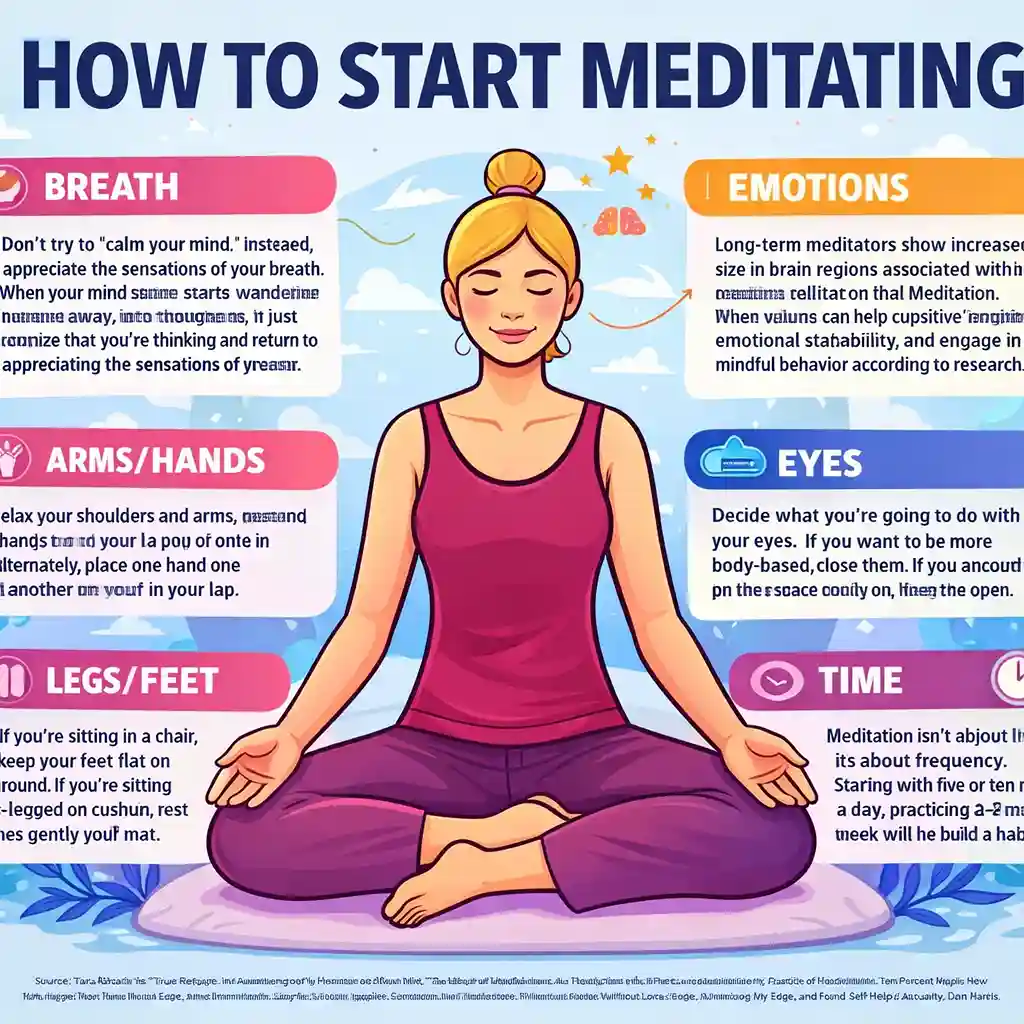
1.What Is Mindfulness Meditation?
1.1. Mindfulness meditation involves:
- Paying attention to the present moment
- Maintaining awareness without judgment
- Cultivating emotional balance and cognitive flexibility
1.2. This practice helps reduce:
- Rumination (overthinking)
- Emotional reactivity
- Stress and anxiety
These factors are directly linked to poor sleep quality, making mindfulness a relevant therapeutic approach.
2. Research methods on meditation improving sleep
The study follows the PRISMA guidelines for systematic reviews.
2.1. Key Details:
- Total records screened: 3,303
- Studies included: 18 RCTs
- Participants: 1,654 adults
- Databases searched: PubMed, Embase, EBSCO, Cochrane
2.2. The criteria include ways meditation improves sleep:
- Adults with clinically significant sleep disturbance
- Structured mindfulness meditation interventions
- Valid sleep measurements (e.g., PSQI, ISI)
2.3. Control Groups:
- Specific active controls: Evidence-based sleep treatments (e.g., CBT-I)
- Nonspecific active controls: Placebo-like interventions (education, attention-matched programs)
3. Key Results of the Meta-Analysis
3.1. Compared to Specific Active Controls (e.g., CBT-I)
- No significant improvement in sleep quality
- Effect size at post-treatment: ES = 0.03
- Follow-up (5–12 months): ES = -0.14
- Strength of evidence: Low
Interpretation: Mindfulness meditation is not superior to established sleep treatments.
3.2. Compared to Nonspecific Active Controls
- Significant improvement in sleep quality
- Post-intervention: ES = 0.33
- Follow-up: ES = 0.54
- Strength of evidence: Moderate
Interpretation: Mindfulness meditation is more effective than placebo-like interventions.
3.3. Long-Term Effects
- Benefits were maintained at 5–12 months follow-up
- Suggests potential sustained improvement in sleep quality
3.4. Dose–response relationship
There is no clear correlation between meditation duration and outcomes
Mixed results for home practice
More research on meditation is needed to determine the optimal “dose”.
4. How Mindfulness Meditation Improves Sleep
Mindfulness meditation may enhance sleep through multiple mechanisms:
- Reduce rumination and intrusive thoughts
Reduce emotional reactions
Improve the ability to reassess cognition about meditation
Promote relaxation and activate the parasympathetic nervous system
These changes help the brain transition into a sleep-ready state more effectively.
5. Safety and Limitations
5.1. Safety
- No significant adverse effects reported
- Minor temporary emotional discomfort in early stages
5.2. Limitations
- Moderate risk of bias in many trials
- Limited objective sleep measurements
- High variability between studies
5.3. Implications for practice and future research on meditation improving sleep:
5.3.1Practical Implications for Sleep Improvement
Based on current evidence, mindfulness meditation can be effectively applied as a complementary strategy to improve sleep quality and mental health.
Key applications in practice:
- Integrate mindfulness into nighttime routines to reduce stress and promote relaxation
- Combine with Cognitive Behavioral Therapy for Insomnia (CBT-I) for enhanced outcomes
- Utilize digital mindfulness apps to increase accessibility and adherence
- Apply in clinical settings for patients with insomnia, anxiety, and depression
👉 This makes mindfulness a scalable, low-cost solution for improving sleep in both general and clinical populations.
Results should be interpreted cautiously and require further validation.
6. Clinical Implications
- Mindfulness meditation can be used as a complementary treatment
- Suitable for patients who:
- Cannot tolerate medication
- Lack access to CBT-I
- Meditation helps us fall asleep faster, sleep better, and more fully, so it is very suitable for elderly patients.
- May be integrated into mental health and sleep care programs

meditation-improves-sleep

7. Conclusion
This meta-analysis provides evidence that mindfulness meditation can improve sleep, especially when compared to non-specific control interventions.
Although it is not superior to established treatments such as CBT-I, it remains a safe, accessible, and promising option for people with sleep disorders.
Future research on meditation improving good sleep should focus on long-term outcomes, adherence levels, and personalized treatment strategies for insomnia. …
SEO Keywords
- mindfulness meditation sleep quality
- meditation for insomnia research
- MBSR sleep improvement
- MBCT insomnia treatment
- meditation and mental health sleep
- systematic review mindfulness sleep
- RCT meditation sleep study