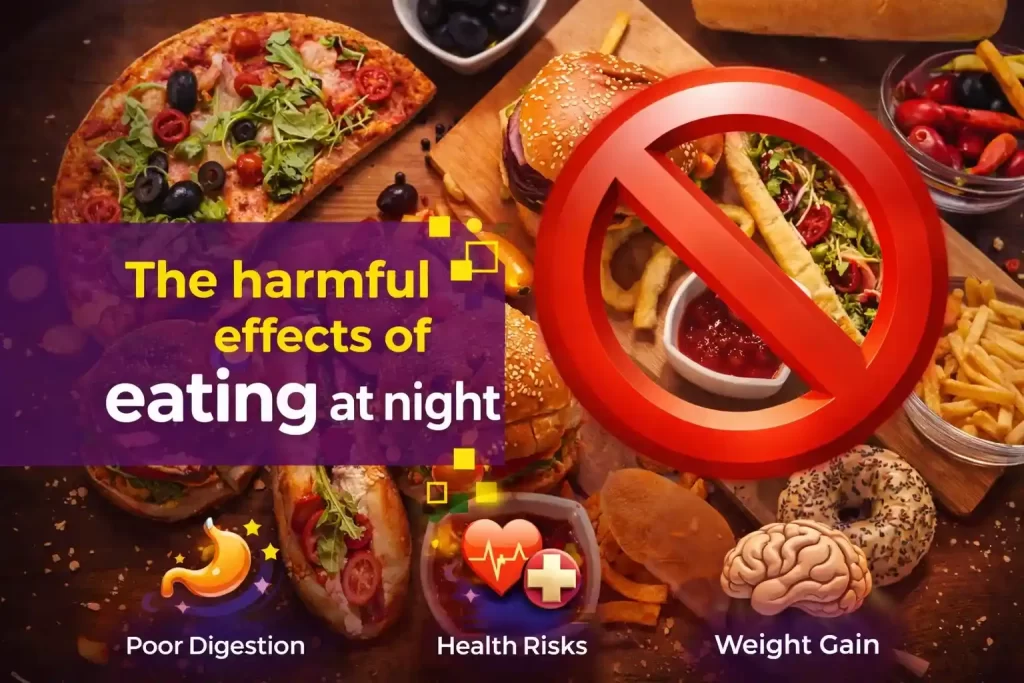
Nighttime eating habits—including timing, frequency, and food quality—are strongly associated with an increased risk of all-cause mortality, cancer, and diabetes, and especially eating at night. Learn about the key findings from the NHANES study.
Night time eating has become an important lifestyle factor that affects long-term health outcomes. Recent large-scale research based on the National Health and Nutrition Examination Survey (NHANES) highlights a strong link between late-night eating at patterns and an increased risk of all-cause mortality, cancer, and diabetes-related death.
Understanding how eating time, frequency, and food quality eating at night affect health can help individuals adopt smarter eating strategies to reduce mortality risk and improve metabolic health.
1.Study Overview Eating At Night
- Population: 41,744 adults (NHANES 2002–2018)
- Follow-up period: Median 8.7 years
- Total deaths recorded: 6,066
- Cancer deaths: 1,381
- Diabetes deaths: 206
Researchers used Cox regression models to evaluate associations between night eating behaviors and mortality risks.
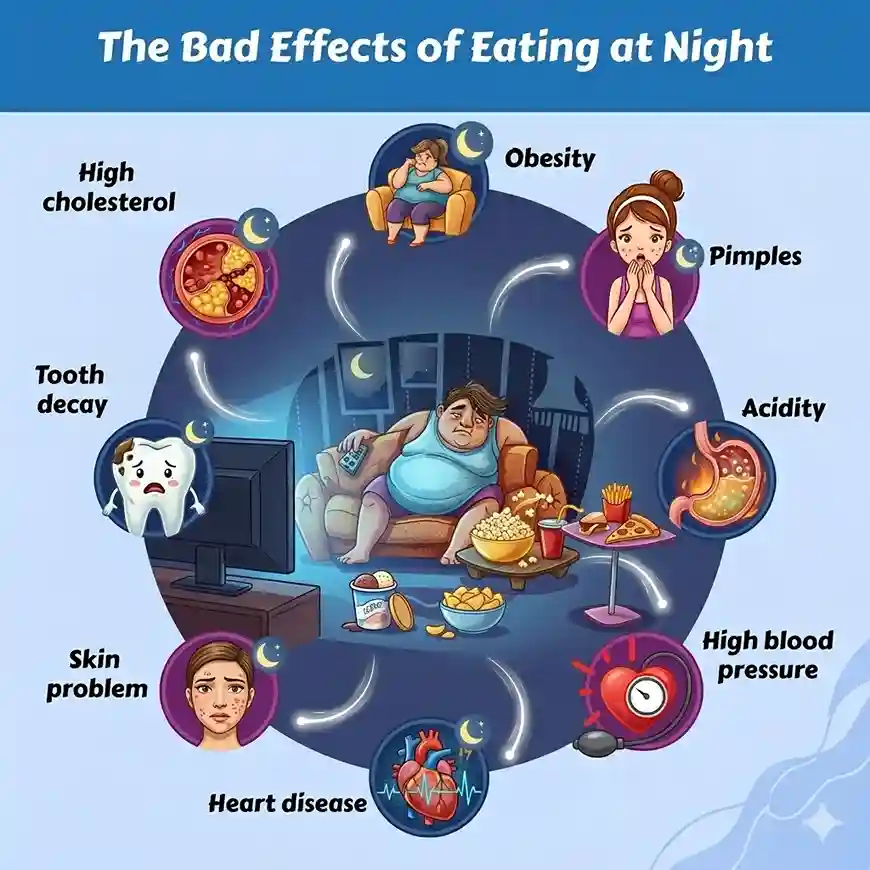
2. Key Findings
2.1. Eating at Timing and Mortality Risk
Late-night eating significantly increases health risks:
- Eating between 23:00 – 01:00 → Higher risk of all-cause mortality
- Eating between 22:00 – 00:00 → Increased risk of diabetes mortality
- Eating between 00:00 – 01:00 → Elevated overall mortality risk
- ❗ Eating before 23:00 showed lower risk levels
The later you eat at night, the greater the mortality risk, especially for metabolic diseases.
2.2. Frequency of Night Eating
Eating more frequently eating at night leads to worse outcomes:
- Eating once per night → Increased risk of:
- All-cause mortality (↑10%)
- Diabetes mortality (↑72%)
- Eating two or more times per night →
- All-cause mortality increases by 38%
Higher night eating frequency = higher health risk
2.3. Food Quality Matters
The quality of food consumed at night plays a decisive role:
2.3.1High-risk foods:
- Refined carbohydrates
- Added sugars
- High-fat, energy-dense foods
Associated with:
- 21% higher all-cause mortality
- 97% higher diabetes mortality
2.3.2Lower-risk foods:
- Fruits, vegetables
- Whole grains
- Low-energy-density meals
→ No significant increase in mortality risk
Choosing low-calorie, nutrient-dense foods at night may reduce health risks.
3. Biological Mechanisms
Night eating may increase mortality risk through several powerful physiological pathways:
- Circadian rhythm disruption
- Impaired metabolic regulation
- Increased blood glucose (HbA1c, fasting glucose, OGTT)
- Chronic inflammation and oxidative stress
These mechanisms contribute to diabetes progression, cancer development, and premature death.
4. Practical Recommendations
To reduce health risks associated with eating at night
Avoid eating after 23:00
Limit night eating frequency
Choose low-energy, nutrient-rich foods
Maintain consistent meal timing aligned with circadian rhythm
5. Strengths and Limitations
5.1. Strengths:
Large dataset, nationally representative
Long follow-up period eating at night
Comprehensive adjustment for confounding factors
5.2. Limitations:
Based on self-reported dietary intake
Eating at Night only measured at baseline
Potential confounding factors still exist
Limited data on sleep duration and occupation

eating-at-night-and-its-harmful-effects

6. Conclusion (SEO Optimized)
Night eating is a significant and modifiable risk factor for increased mortality. Late timing, high frequency, and poor food quality at night are strongly associated with higher risks of all-cause, cancer, and diabetes mortality.
However, adopting healthier night eating habits, such as eating earlier and choosing low-energy foods, may substantially reduce these risks.