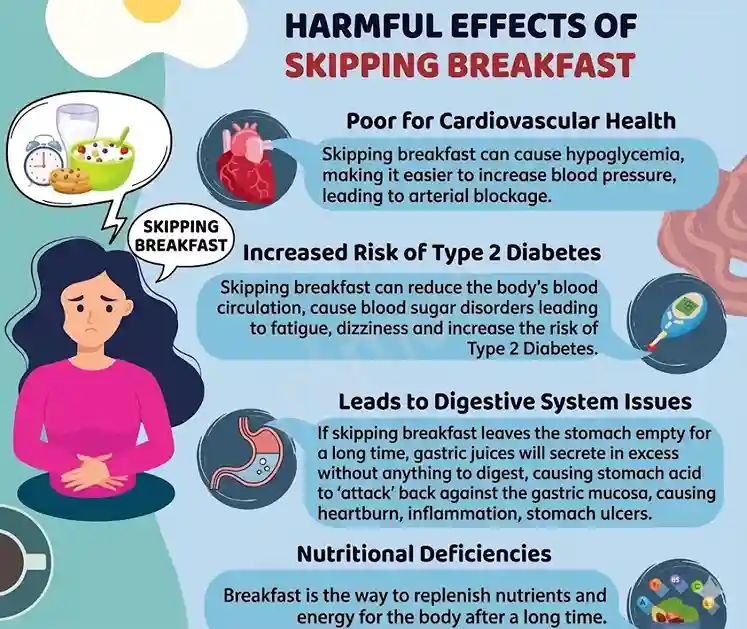
“Breakfast is the most important meal of the day” is a belief that has been widely accepted for decades. Many people think eating breakfast helps with weight loss, metabolism, and overall health.
However, modern research suggests that this advice may not apply to everyone. The truth is more nuanced: breakfast is not essential for all individuals, and skipping it does not automatically harm your health.
👉 Let’s explore the science behind breakfast and whether skipping it is actually bad for you.
1. Do Breakfast Eaters Have Better Health?
Many studies show that people who eat breakfast tend to be:
✔ Leaner and less likely to be overweight
✔ At lower risk of chronic diseases
But there’s a key detail:
These are observational studies, meaning they show correlation—not causation.
Why this matters:
- Breakfast eaters often have healthier lifestyles overall
- They tend to eat more fiber and nutrients
- They are less likely to smoke or drink excessively
So, it may not be breakfast itself—but the healthy habits that come with it.
2. Does Breakfast Boost Your Metabolism?
A common myth is that breakfast “kick-starts” your metabolism.
The truth:
Your metabolism depends on total daily calorie intake, not meal timing.
- The thermic effect of food (calories burned during digestion) is the same regardless of when you eat
- Studies show no difference in calories burned between breakfast eaters and skippers

is-skipping-breakfast-really-dangerous
3. Skipping breakfast does NOT slow metabolismDoes Skipping Breakfast Cause Weight Gain?
This is one of the biggest concerns.
3.1. Some believe skipping breakfast makes you:
- Hungrier later
- More likely to overeat
3.2. While you may eat more at lunch, research shows:
- It’s not enough to compensate for the skipped meal
- Total daily calorie intake may actually decrease
3.3. High-quality studies found no difference in weight loss between:
- People who eat breakfast
- People who skip breakfast
➡️ Bottom line: Skipping breakfast does not automatically lead to weight gain
4. Can Skipping Breakfast Have Benefits?
Skipping breakfast is often part of intermittent fasting, especially the 16/8 method (fast for 16 hours, eat within 8 hours).
Potential benefits:
✔ Reduced calorie intake
✔ Improved weight management
✔ Better metabolic health
However, it doesn’t work for everyone:
- Some people may feel dizzy, tired, or unfocused
- Others may benefit greatly
Results vary depending on the individual

5. Final Verdict: Is Breakfast Necessary?
The science is clear:
✔ Breakfast is not essential for everyone
✔ It does not boost metabolism
✔ Skipping it does not automatically cause weight gain
What matters most is:
- Your total daily nutrition
- Your lifestyle habits
- Your personal preference
6. Should You Eat Breakfast or Skip It?
✔ Eat breakfast if:
- You feel hungry in the morning
- You perform better with early meals
- You enjoy a structured eating routine
✔ Skip breakfast if:
- You’re not hungry
- You prefer intermittent fasting
- You feel better eating later in the day
If you do eat breakfast, choose high-protein, nutrient-rich foods for the best results.
7. Conclusion
Breakfast is not a one-size-fits-all rule.
The idea that skipping breakfast is unhealthy is largely a myth.
What truly matters is maintaining a balanced diet, healthy habits, and listening to your body.