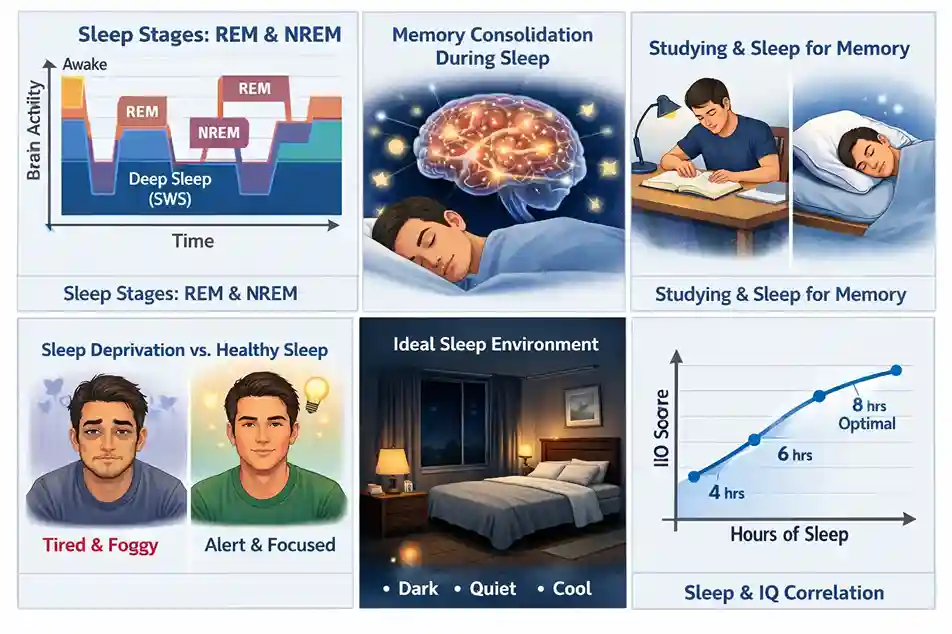
Sleep is a fundamental biological process that directly influences both physical health and cognitive performance. Recent research in Neuroscience shows a strong connection between sleep quality, memory retention, and intelligence levels.
Understanding how sleep affects the brain can help you improve learning ability, boost IQ, and protect long-term mental health.
1. The Science of Sleep
Sleep is divided into two main phases:
- REM (Rapid Eye Movement) sleep
- NREM (Non-Rapid Eye Movement) sleep, including deep sleep stages
Each phase plays a unique role in brain function:
- NREM sleep supports physical recovery and brain restoration
- REM sleep is essential for memory processing and emotional balance
These cycles repeat multiple times each night, making consistent sleep crucial for optimal brain performance.

2. Sleep and Memory Consolidation
One of the most critical functions of sleep is memory consolidation—the process of converting short-term memories into long-term storage.
During REM sleep:
- The brain reorganizes information
- Strengthens neural connections
- Integrates new knowledge with existing memories
During deep NREM sleep (Slow-Wave Sleep):
- The brain “replays” daily experiences
- Reinforces learning through neural activity known as sleep spindles
Research from Harvard Medical School shows that people who sleep after learning perform significantly better in memory tests than those who stay awake.
In simple terms: sleep helps your brain “save” what you learn.
3. Sleep and IQ (Intelligence Quotient)
IQ reflects problem-solving ability, reasoning, and cognitive performance. While genetics play a role, sleep is a major influencing factor.
Adequate sleep:
- Improves focus and attention
- Enhances creativity and critical thinking
- Strengthens learning capacity
Studies published in Sleep found that children with consistent sleep patterns tend to have higher IQ scores compared to those with irregular sleep.
Better sleep = better brain performance.
4. Effects of Sleep Deprivation
Lack of sleep negatively impacts both memory and IQ.
4.1. Short-term effects:
- Poor concentration
- Reduced reaction time
- Difficulty learning new information
4.2. Long-term effects:
- Increased risk of Alzheimer’s disease
- Cognitive decline
- Emotional instability
Sleep deprivation also affects the prefrontal cortex, the brain area responsible for decision-making and self-control, leading to impulsive behavior and poor judgment.
5. Why Sleep Is Essential for Brain Health
During sleep, the brain performs critical maintenance:
- Clears toxins accumulated during the day
- Restores neural function
- Strengthens brain connections
Without enough sleep, these processes are disrupted, increasing the risk of neurological disorders.

6. Tips to Improve Sleep for Better Memory and IQ
6.1. Maintain a Consistent Sleep Schedule
Go to bed and wake up at the same time daily.
6.2. Create a Sleep-Friendly Environment
Keep your bedroom:
- Dark
- Quiet
- Cool
6.3. Limit Screen Time Before Bed
Blue light reduces melatonin production, making it harder to fall asleep.
6.4. Avoid Stimulants
Reduce caffeine and nicotine intake in the evening.
6.5. Practice Relaxation Techniques
Try:
- Meditation
- Reading
- Deep breathing
6.6. Stay Physically Active
Regular exercise improves sleep quality and brain function.
7. Conclusion
Sleep plays a vital role in shaping both memory and IQ. High-quality sleep enhances learning, strengthens cognitive abilities, and supports long-term brain health. On the other hand, sleep deprivation can severely impair mental performance and increase the risk of neurological diseases.
Prioritizing healthy sleep habits is one of the simplest and most effective ways to boost your intelligence and protect your brain for life.