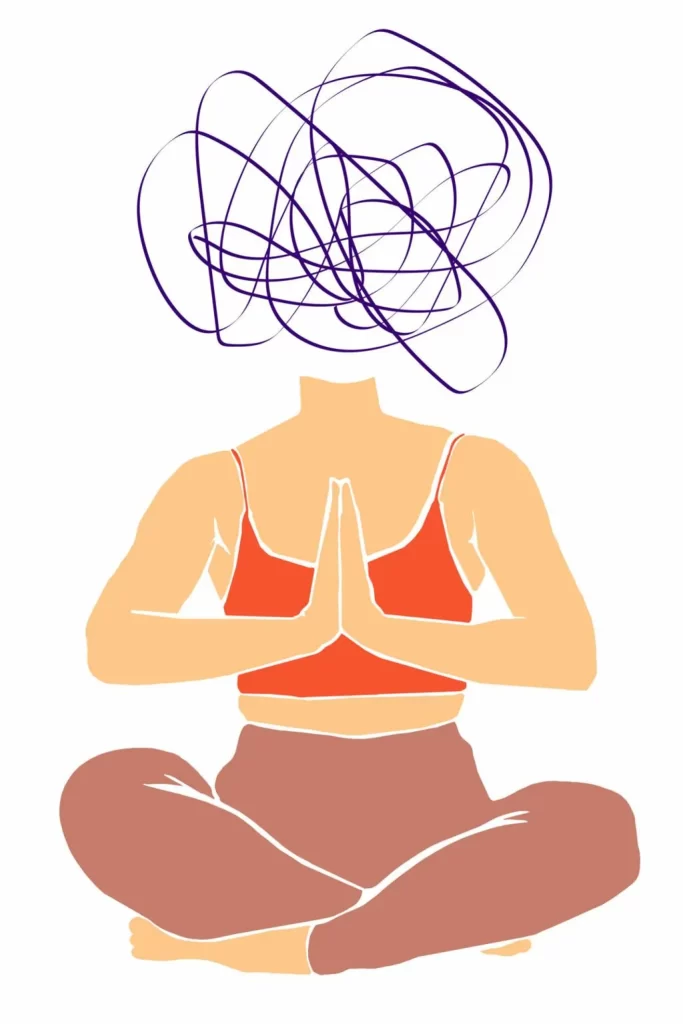
Overthinking is often triggered by stress and can increase anxiety and unhappiness. Meditation and mindfulness help calm the mind and reduce repetitive thoughts. Simple habits like breathing, movement, and nature exposure can quickly stop rumination.
1. What Is Overthinking?
Overthinking is the habit of repeatedly analyzing the past or worrying about the future without reaching a solution. It often shows up as constant “what if” thoughts, self-doubt, or replaying past mistakes.
While it may feel productive, overthinking usually leads to stress, indecision, and emotional exhaustion rather than clarity.

2. Why Overthinking Is Harmful
Overthinking can negatively impact both mental and physical health:
- Increases anxiety and stress levels
- Leads to indecision and lack of action
- Triggers negative emotions like guilt or regret
- Disrupts sleep and focus
- May be linked to anxiety disorders and depression
Once you’ve analyzed a problem enough, continuing to think about it often creates more harm than solutions.
3. 7 Science-Backed Ways to Stop Overthinking
3.1. Practice Meditation
Meditation helps quiet the mind by reducing unnecessary thoughts. Even a few minutes of stillness can create a sense of calm and clarity.
How to start:
- Focus on your breathing
- Let thoughts pass without judgment
- Practice 5–10 minutes daily
3.2. Use Deep Breathing Techniques
Deep breathing activates your body’s relaxation response and reduces stress hormones.
Quick method:
- Inhale for 4 seconds
- Hold for 4 seconds
- Exhale for 6 seconds
- Repeat for 2–3 minutes
3.3. Move Your Body
Physical activity helps release endorphins and shift your focus away from negative thoughts.
Try:
- Walking or jogging
- Dancing
- Quick home workouts (10–15 minutes)
3.4. Spend Time in Nature
Nature naturally reduces stress and improves emotional well-being.
Ideas:
- Walk in a park or forest
- Sit near water
- Practice mindful observation outdoors

3.5. Practice Mindfulness
Mindfulness trains your brain to focus on the present instead of worrying about the past or future.
Simple tip:
Focus on what you can see, hear, and feel right now.
3.6. Change Your Thought Patterns
Replace negative thoughts with more balanced or neutral perspectives.
Example:
- Instead of: “What if everything goes wrong?”
- Try: “What if things turn out okay?”
3.7. Try Yoga for Stress Relief
Yoga combines movement, breathing, and mindfulness to reduce stress and anxiety.
Benefits:
- Improves mood
- Reduces tension
- Enhances mental clarity
4. The Takeaway
Overthinking may feel uncontrollable, but it’s a habit you can change. By practicing meditation, deep breathing, movement, and mindfulness, you can break the cycle of repetitive thoughts.
Small daily actions can lead to a calmer mind, reduced anxiety, and a healthier, more balanced life.
Start with just one technique today—and notice how quickly your mind begins to relax.