Bruises are a common skin condition that most people experience at some point in their lives. While usually harmless, they can sometimes signal underlying health issues. This SEO-optimized guide explains what bruises are, why they happen, and when you should see a doctor.
1. What Is a Bruise?
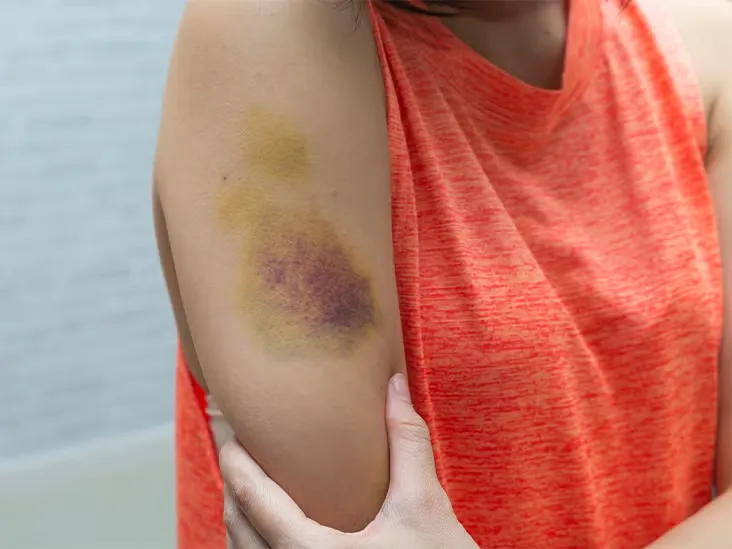
A bruise forms when small blood vessels (capillaries and veins) break under the skin due to injury. Blood leaks into surrounding tissues, causing visible discoloration.
- Light skin: red → purple → yellow/green → brown
- Dark skin: purple, dark brown, or black
This color change reflects the body’s natural healing process.
2. Types of Bruises You Should Know
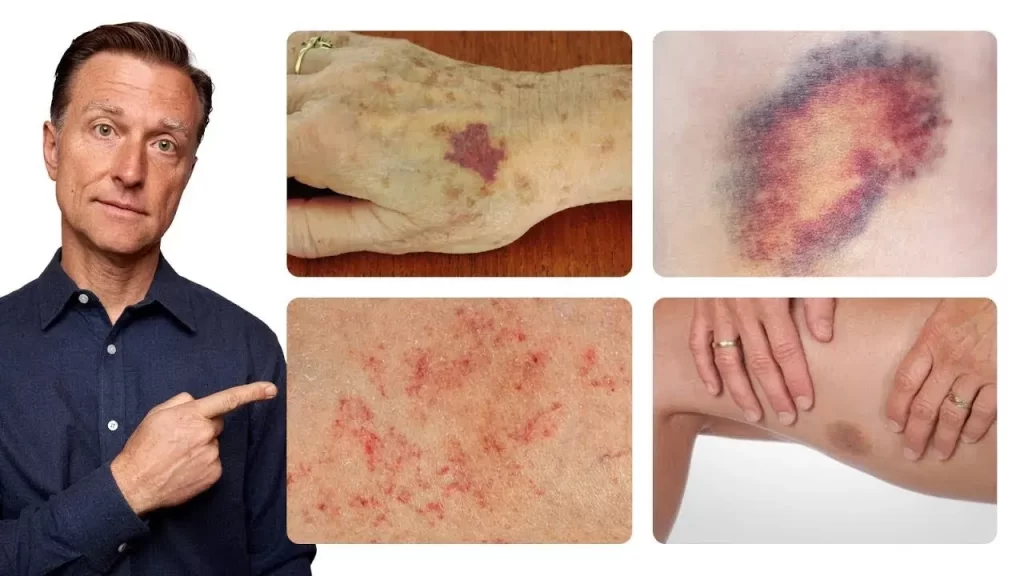
2.1. Ecchymosis
The medical term for a typical bruise larger than 1 cm.
2.2. Hematoma
A hematoma is a larger, more serious collection of blood. It may feel swollen, raised, and painful, often requiring medical attention.
2.3. Purpura
Small purple or brown patches (4–10 mm) under the skin, larger than pinpoint spots but smaller than typical bruises.
2.4. Petechiae
Tiny pinpoint spots (<2 mm) of bleeding under the skin or mucous membranes. These resemble a rash but are not raised or itchy.
3. What Causes Bruising?
Bruising occurs when blood escapes from damaged vessels and becomes trapped under the skin.
Common causes include:
- Physical injury or trauma
- Aging skin (thinner and more fragile)
- Blood disorders (e.g., hemophilia)
- Medications (anticoagulants, aspirin, steroids)
- Low platelet levels
4. Why Do I Bruise So Easily?
If you notice frequent bruising, it could be due to:
4.1. Aging
Skin becomes thinner and blood vessels more fragile over time.
4.2. Medications
Blood thinners like warfarin or aspirin increase bleeding risk.
4.3. Vitamin Deficiencies
- Low vitamin C weakens blood vessels
- Low vitamin K affects clotting
4.4. Genetics
Some people naturally have more fragile blood vessels.
4.5. Liver Problems
Conditions like cirrhosis can impair clotting.
4.6. Bleeding Disorders
Conditions such as von Willebrand disease can cause frequent bruising.
4.7. Rare Causes
In rare cases, frequent bruising may be linked to leukemia.
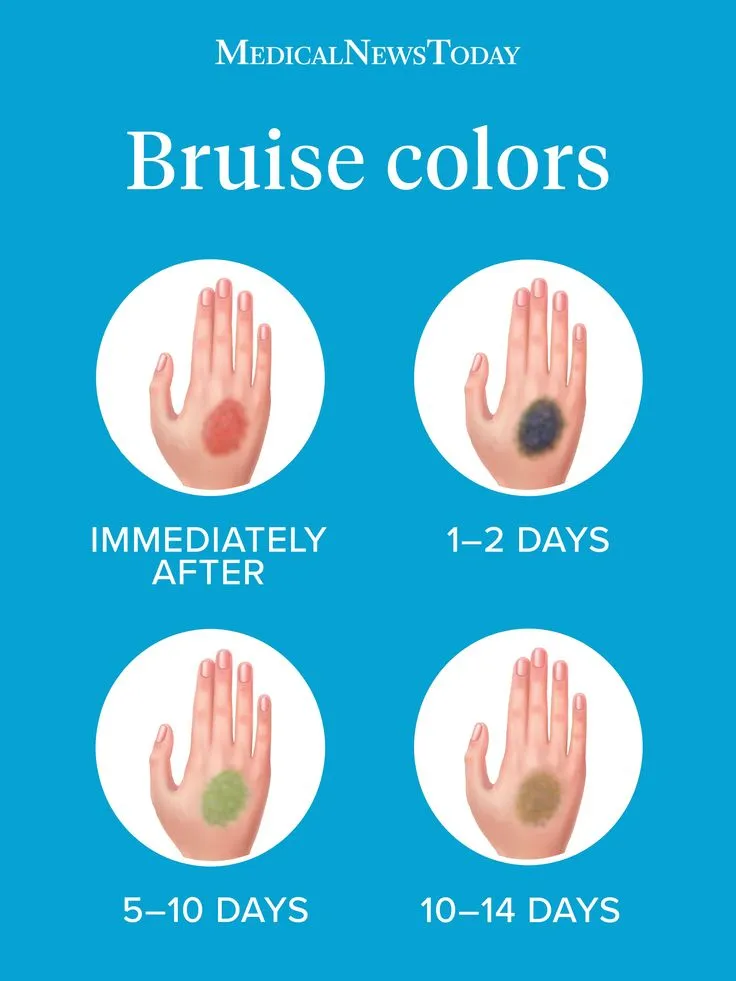
5. Bruise Healing Stages
Bruises change color as they heal:
- Red/Purple – immediately after injury
- Blue/Black – within a few days
- Green/Yellow – after 5–10 days
- Light Brown – fades over 10–14 days
These changes show how your body breaks down trapped blood.
6. Common Types and Locations
6.1. Subcutaneous
Under the skin (most common)
6.2. Intramuscular
Inside muscles
6.3. Periosteal
On the bone surface
Common areas:
- Arms and legs
- Ribs (from falls or coughing)
- Under nails (subungual hematoma)
- Tailbone
- Breast
- Foot (e.g., “stone bruise”)
7. When Should You Worry About a Bruise?
Seek medical attention if you have:
- A bruise lasting more than 2 weeks
- Frequent or unexplained bruising
- Large, painful swelling
- Vision problems with a black eye
- Signs of bleeding (nosebleeds, blood in urine/stool)
Go to the emergency room if you have a head injury with symptoms like confusion, vomiting, or memory loss.
8. How to Get Rid of a Bruise Faster
Most bruises heal naturally within 2 weeks. You can speed recovery by:
- Applying ice for the first 24–48 hours
- Resting and elevating the area
- Using warm compresses after 48 hours
- Taking acetaminophen for pain (avoid NSAIDs if advised)
9. How to Prevent Bruising
- Wear protective gear during sports
- Keep living spaces clutter-free
- Ensure proper lighting at night
- Maintain a balanced diet with vitamins
- Monitor blood-thinning medications
10. FAQs
How long do bruises last?
Most bruises heal within 10–14 days, but severe ones may take longer.
What color indicates a serious bruise?
Color alone doesn’t determine severity—size, pain, and swelling matter more.
Can bruising be a sign of cancer?
Rarely, frequent unexplained bruising may be linked to conditions like leukemia.
11. Conclusion
Bruises are usually harmless and part of the body’s natural healing process. However, frequent, severe, or unexplained bruising may indicate an underlying health issue and should not be ignored.
Understanding the causes, stages, and warning signs can help you manage bruises effectively and know when to seek medical care.