
Persistent feel full—even when you haven’t eaten much—is a surprisingly common digestive complaint. Many people describe it as feeling “stuffed all the time” or unable to finish normal meals. In some cases, this may feel full be linked to Functional Dyspepsia, but there are several other underlying causes worth understanding.
This SEO-optimized guide breaks down the main reasons you always feel full, potential health risks, and when to seek medical help.
1. What Does “Always Feeling Full” Mean?
Feeling full all the time (also called early satiety) happens when your body signals fullness too quickly or digestion slows down. This may involve:
- Delayed stomach emptying
- Gut sensitivity
- Hormonal imbalances
- Stress and anxiety
- Diet and lifestyle habits
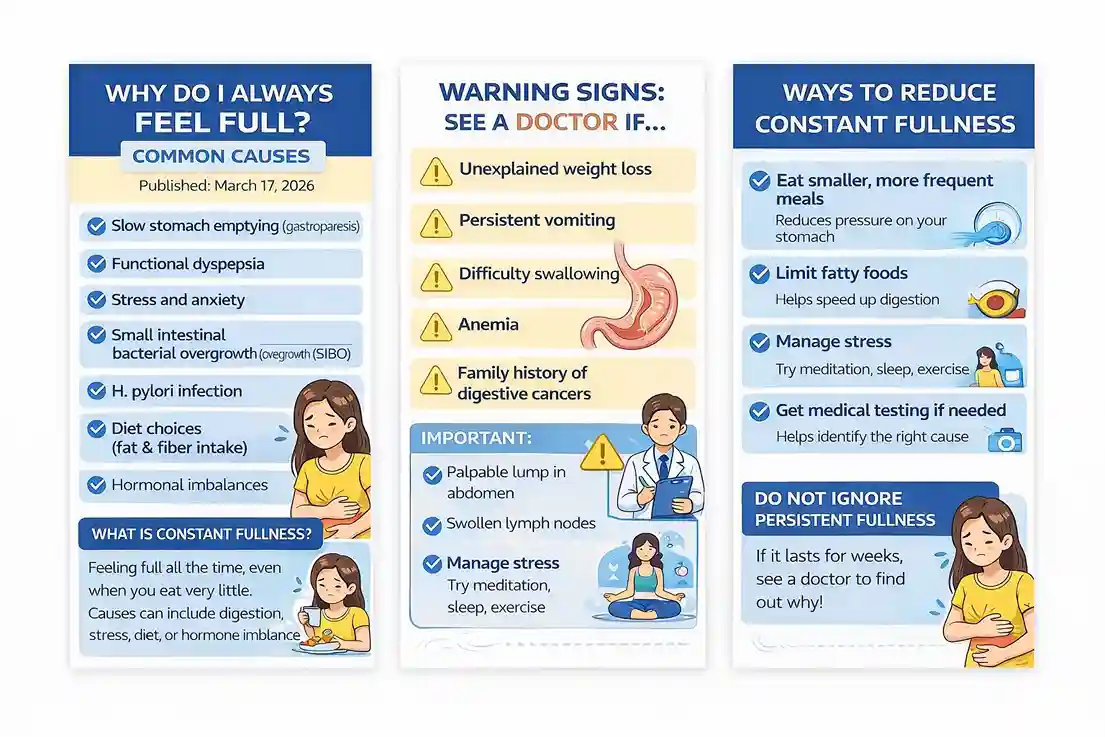
2. 7 Common Causes of Constant Fullness
2.1. Slow Stomach Emptying (Gastroparesis)
One major cause is Gastroparesis, where the stomach empties food too slowly.
Symptoms include:
- Feeling full long after eating
- Nausea or bloating
- Loss of appetite
This condition is often linked to diabetes or nerve damage affecting digestion.
2.2. Functional Dyspepsia
Even when tests look normal, you may still feel overly full. This is typical of Functional Dyspepsia.
Key signs:
- Fullness after small meals
- Inability to finish regular portions
- No visible structural issues in tests
It’s caused by heightened stomach sensitivity rather than physical blockage.
2.3. Stress and Anxiety
Mental health plays a huge role in digestion. Chronic stress affects the gut-brain axis, especially the Vagus Nerve.
Effects of stress:
- Reduced stomach capacity
- Slower digestion
- Increased fullness signals
2.4. Small Intestinal Bacterial Overgrowth (SIBO)
Small Intestinal Bacterial Overgrowth occurs when excess bacteria ferment food too early in digestion.
Common symptoms:
- Bloating
- Gas buildup
- Persistent fullness
2.5. H. pylori Infection
Infection with Helicobacter pylori can irritate the stomach lining.
Possible effects:
- Increased stomach sensitivity
- Inflammation
- Discomfort after eating
2.6. Diet Choices (Fat & Fiber Intake)
Certain foods naturally slow digestion:
- High-fat foods → trigger Cholecystokinin release
- High-fiber foods → delay stomach emptying
While healthy, large portions can lead to prolonged fullness.
2.7. Hormonal Imbalances
Fullness is regulated by hormones like:
- Leptin (long-term appetite control)
- Cholecystokinin (short-term fullness)
Imbalances can make you feel full even when you haven’t eaten much.
3. Red Flags: When to See a Doctor
Occasional fullness is normal—but seek medical attention immediately if you notice:
- Unexplained weight loss
- Persistent vomiting
- Difficulty swallowing
- Anemia
- Family history of digestive cancers
These may indicate serious conditions like Gastrointestinal cancer.
4. How to Reduce That Constant Full Feeling
Try these simple strategies:
4.1. Eat Smaller, More Frequent Meals
Reduces pressure on your stomach.
4.2. Limit High-Fat Foods
Helps speed up digestion.
4.3. Manage Stress
Meditation, exercise, or sleep can improve gut function.
4.4. Stay Hydrated
Supports smoother digestion.
4.5. Get Medical Testing if Needed
Tests like gastric emptying studies or breath tests can identify the cause.
5. FAQs About Feeling Full All the Time
5.1. Why do I feel full even when I haven’t eaten much?
This is often due to early satiety, caused by slow digestion, stress, or hormone imbalance.
5.2. Is feeling full all the time serious?
Not always. But if it comes with weight loss, vomiting, or pain, it could signal a serious condition.
5.3. Can stress really affect fullness?
Yes. Stress impacts the gut-brain connection and can physically reduce your stomach’s ability to expand.
5.4. What foods make fullness worse?
High-fat and high-fiber foods can slow digestion and increase the feeling of fullness.
5.5. How long should fullness last after eating?
Normally, fullness fades within 2–4 hours. Longer than that may indicate a digestive issue.
5.6. Can gut bacteria cause constant fullness?
Yes. Conditions like SIBO can produce gas and bloating, making you feel full for hours.
5.7. Should I see a doctor for persistent fullness?
If symptoms last several weeks or worsen, medical evaluation is recommended.
6. Conclusion
Feeling full all the time isn’t just uncomfortable—it’s your body signaling something deeper. Whether it’s related to digestion, stress, diet, or hormones, identifying the root cause is key to relief.
Start with simple lifestyle changes, but don’t ignore persistent symptoms—especially if warning signs appear.