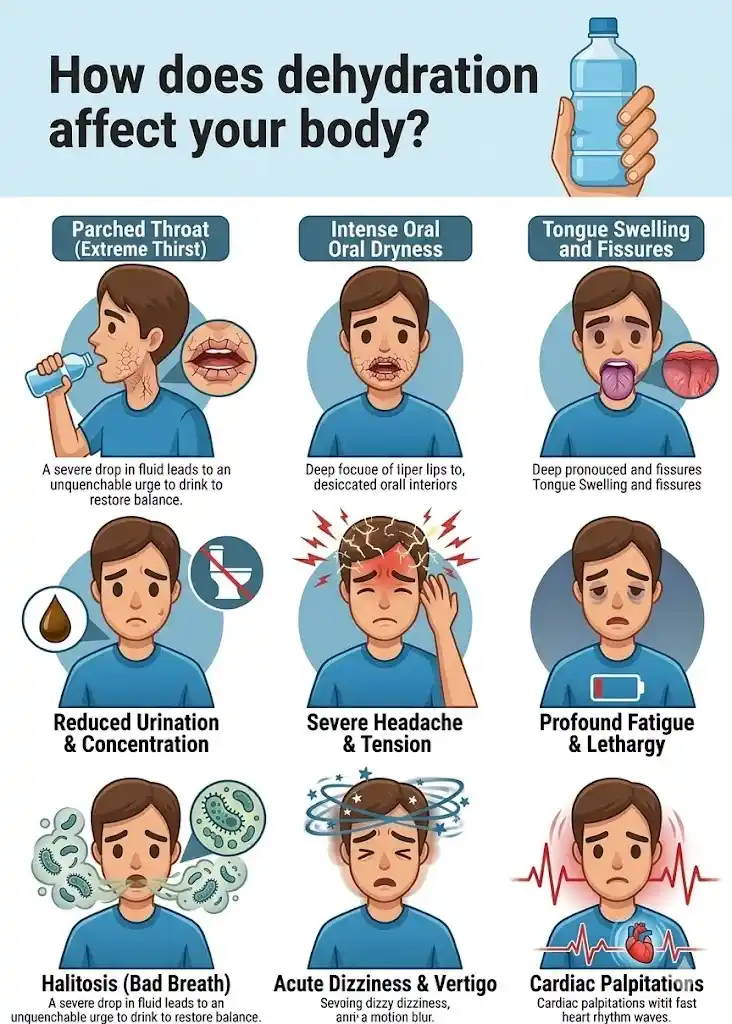
Dehydration is more than just feeling thirsty — it’s a condition that can quietly affect your energy, brain function, mood, and overall health. Since water makes up about 60% of the human body, even a small loss can disrupt essential processes.
1. What Is Dehydration?
Dehydration occurs when your body loses more fluids than it takes in, leaving it unable to function efficiently. This can happen due to:
- Not drinking enough water
- Excessive sweating
- Illness (fever, vomiting, diarrhea)
- Hot weather or intense exercise
- Certain medications
Even mild dehydration (1–2% fluid loss) can negatively impact both physical and mental performance.

2. Physical Effects of Dehydration on the Body
1. Fatigue and Low Energy
Water is essential for circulation and oxygen delivery. When dehydrated, your body works harder, leaving you feeling tired, sluggish, and weak.
2. Muscle Cramps and Joint Pain
Dehydration disrupts electrolytes like sodium and potassium, leading to muscle cramps, stiffness, and joint discomfort.
3. Dry Skin and Overheating
Without enough water, your body struggles to regulate temperature, increasing the risk of heat exhaustion or heatstroke. Skin may become dry and flaky.
4. Headaches and Dizziness
Low fluid levels can cause the brain to temporarily shrink from the skull, triggering headaches, dizziness, and light-headedness.
5. Reduced Urination and Dark Urine
One of the clearest signs of dehydration is dark yellow urine and infrequent urination.
6. Digestive Issues and Constipation
Water supports digestion. Without it, stools become harder, causing constipation and discomfort.
3. Mental Effects of Dehydration on the Brain
The brain is about 75% water, making it highly sensitive to fluid loss.
1. Impaired Cognitive Function
Dehydration reduces focus, alertness, and short-term memory, making tasks harder to complete.
2. Mood Swings and Irritability
Lack of hydration can increase stress, anxiety, and irritability, especially in children and older adults.
3. Brain Fog and Poor Concentration
You may feel mentally slow, forgetful, or unfocused — often described as “brain fog.”
4. Increased Stress Levels
Dehydration raises cortisol (stress hormone), making you feel more overwhelmed.
4. Common Signs and Symptoms of Dehydration
Recognizing dehydration early can prevent serious health issues. Watch for:
- Thirst (often already mildly dehydrated)
- Dry mouth or bad breath
- Fatigue and weakness
- Headaches
- Dizziness
- Dry skin
- Dark urine or low urination
- Rapid heartbeat
- Confusion or irritability
Severe dehydration can lead to kidney failure, heatstroke, or unconsciousness, especially in children and older adults.
5. Why Hydration Is Essential for Health
Proper hydration supports:
- Healthy digestion
- Nutrient absorption
- Temperature regulation
- Detoxification
- Brain performance
- Heart function
When hydrated, you’ll notice:
- Better skin appearance
- Improved mood
- Higher energy levels
- Sharper thinking
- More effective workouts
6. Best Ways to Stay Hydrated Daily

1. Drink Water Regularly
Aim for 2–2.5 liters (8–10 cups) daily — more if active or in hot climates.
2. Start and End Your Day with Water
Drink a glass in the morning and before bed.
3. Eat Water-Rich Foods
Include foods like watermelon, cucumber, oranges, and lettuce.
4. Carry a Water Bottle
A reusable bottle helps remind you to drink consistently.
5. Add Natural Flavors
Enhance water with lemon, mint, or berries if needed.
6. Hydrate Around Exercise
Drink before, during, and after workouts to replace lost fluids.
7. Conclusion: Water Is Not Optional
Dehydration can affect everything from your muscles to your mood. The initial effects may seem minor but can quickly become serious if ignored.
If you feel tired, it’s because you are , dehydration unfocused, or irritable, the solution can be very simple: Drink more water.
Prioritizing hydration is one of the easiest and most effective ways to improve your physical health, mental clarity, and daily performance.