
Can’t you focus? struggling to focus is something almost everyone experiences. You sit down to work, but your mind drifts—or you find yourself scrolling your phone without realizing it. While occasional distraction is normal, frequent difficulty concentrating may signal deeper issues.
We explore the most common reasons you can’t you focus, including health conditions, lifestyle habits, and proven ways to improve concentration.
1. What Causes Difficulty Focusing?
Can’t you focus to concentrate depends on brain function, energy levels, and mental health. When any of these are disrupted, your focus suffers.
Common causes include:
- Mental health conditions
- Poor sleep
- Stress and anxiety
- Diet and blood sugar levels
- Multitasking habits

2. Health Conditions That Affect Focus
2.1. Attention Deficit Hyperactivity Disorder (ADHD)
ADHD isn’t just a childhood condition—it also affects adults.
Symptoms include:
- Trouble concentrating
- Impulsiveness
- Mood swings
- Poor time management
2.2. Anxiety Disorder
Excessive worrying consumes mental energy, making it hard to focus.
Signs:
- Constant worry
- Fear or nervousness
- Difficulty making decisions
2.3. Depression
Depression affects brain areas responsible for attention, memory, and decision-making.
Symptoms:
- Low mood
- Brain fog
- Poor concentration
2.4. Medications
Certain medications may interfere with focus by altering brain chemistry, including:
- Sleep aids
- Allergy medications
- Antidepressants
- Drugs for muscle spasms or bladder control
2.5. Thyroid Disorders
Hormones from the thyroid gland affect thinking and energy levels.
- Hypothyroidism → brain fog, fatigue
- Hyperthyroidism → restlessness, difficulty concentrating
3. Signs of a Short Attention Span
If you frequently struggle to stay focused, you may notice:
- Making careless mistakes
- Trouble reading long content
- Not listening during conversations
- Leaving tasks unfinished
- Poor time management
- Forgetting appointments
4. Everyday Factors That Reduce Focus
4.1. Stress
When stressed, your brain prioritizes survival over thinking, reducing concentration.
4.2. Hunger
Low blood sugar makes it harder for your brain to function efficiently.
4.3. Multitasking
Switching between tasks reduces productivity and increases mistakes. Your brain works best when focusing on one task at a time.
4.4. Lack of Sleep
Sleep is essential for brain recovery. Even one night of poor sleep can significantly impact focus and memory.
4.5. Poor Diet
- High sugar → energy spikes and crashes
- Unhealthy fats → inflammation affecting brain function
5. When to See a Doctor
If focus issues affect your daily life, consult a healthcare professional—especially if you experience:
- Persistent sadness or hopelessness
- Chronic anxiety
- Sleep disturbances
- Unexplained fatigue
- Weight changes
- Brain fog or memory issues
6. How to Improve Focus Naturally
6.1. Time Blocking
Schedule specific time slots for tasks to reduce distractions and improve productivity.
6.2. Exercise Regularly
Physical activity:
- Reduces stress
- Improves sleep
- Boosts brain function
6.3. Eat a Brain-Healthy Diet
Focus on:
- Fruits and vegetables
- Lean proteins
- Healthy fats
- Whole grains
These provide essential nutrients like vitamins B, C, E, and magnesium.
6.4. Reduce Distractions
- Work in a quiet space
- Turn off notifications
- Limit screen interruptions
6.5. Prioritize Sleep
Aim for 7–9 hours of quality sleep to support memory, focus, and mental clarity.
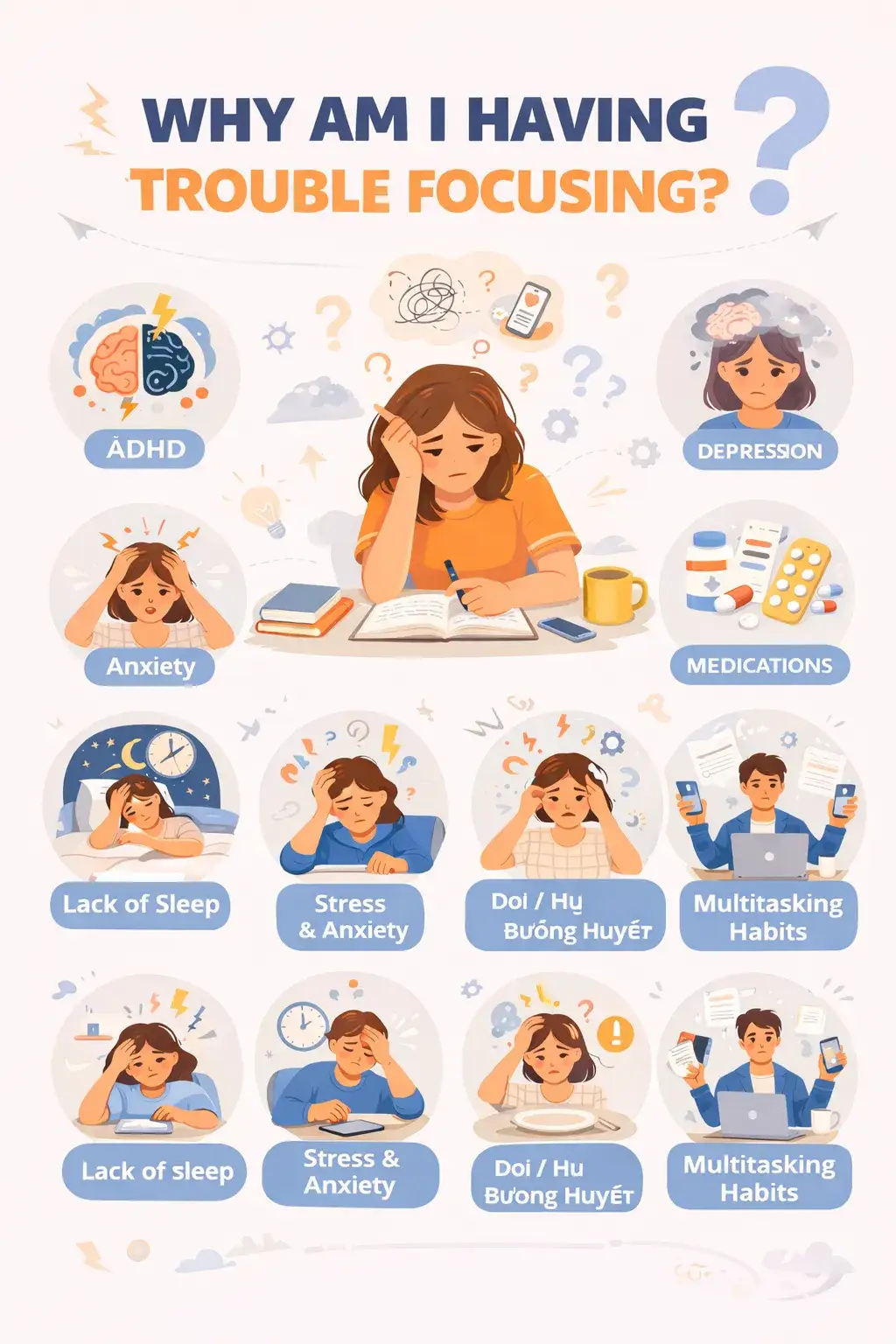
7. Key Takeaways
- Difficulty focusing is common but can have many causes.
- Conditions like Attention Deficit Hyperactivity Disorder, anxiety, and depression may affect attention.
- Lifestyle factors such as stress, poor sleep, and diet also play a major role.
- Improving focus involves healthy habits, structured routines, and addressing underlying health issues.
8. Conclusion
Can’t you focus if you find it hard to stay focused, you’re not alone. The key is identifying the root cause—whether it’s stress, lifestyle habits, or a medical condition. By making small but consistent changes—like improving your sleep, eating well, exercising, and managing distractions—you can significantly boost your concentration and productivity over time.